
Full SAT Guide
A Month-by-Month SAT Preparation Roadmap From 10th Grade Through 12th Grade
Written By DCP Blog Content Management Intern Abhi Kandi · on July 19th, 2026 · 35 min read

Table of Contents
They say students should begin preparing for the SAT early.
The advice appears everywhere.
In counseling meetings.
In parent conversations.
In tutoring advertisements.
In discussions about college lists, scholarships, junior-year schedules, and application deadlines.
But “start early” can mean very different things to different families.
Some parents believe a student should begin taking full-length SAT practice tests in ninth or tenth grade.
Some students purchase several preparation books, complete a few chapters, and then leave them untouched on a desk.
Others postpone the entire process until the spring of eleventh grade, suddenly realizing that the SAT is competing with AP examinations, final projects, extracurricular commitments, summer applications, and college planning.
Neither extreme is necessary.
A tenth grader does not need to spend every weekend completing practice examinations.
A twelfth grader should not be seeing the SAT format for the first time a few weeks before an important testing date.
Effective SAT preparation is not built around panic.
It is built around progression.
In tenth grade, the student should understand the examination and strengthen the academic foundations it measures.
In eleventh grade, the student should move from general preparation to targeted practice and complete the first official SAT attempt.
By twelfth grade, the student should know whether the score supports the college list, whether another attempt is necessary, and exactly what needs to improve.
That is the difference between studying for the SAT and managing the SAT.
Studying means completing questions.
Managing means understanding the score, the timeline, the weaknesses, the available testing dates, the college expectations, and the recovery plan.
The goal is not simply to take the SAT.
The goal is to reach the strongest reasonable score without allowing the examination to consume the student’s entire high school experience.
Understanding and registering for the Digital SAT
Before building a preparation schedule, students should understand the examination they are preparing to take.
The digital SAT contains two sections:
Reading and Writing.
Math.
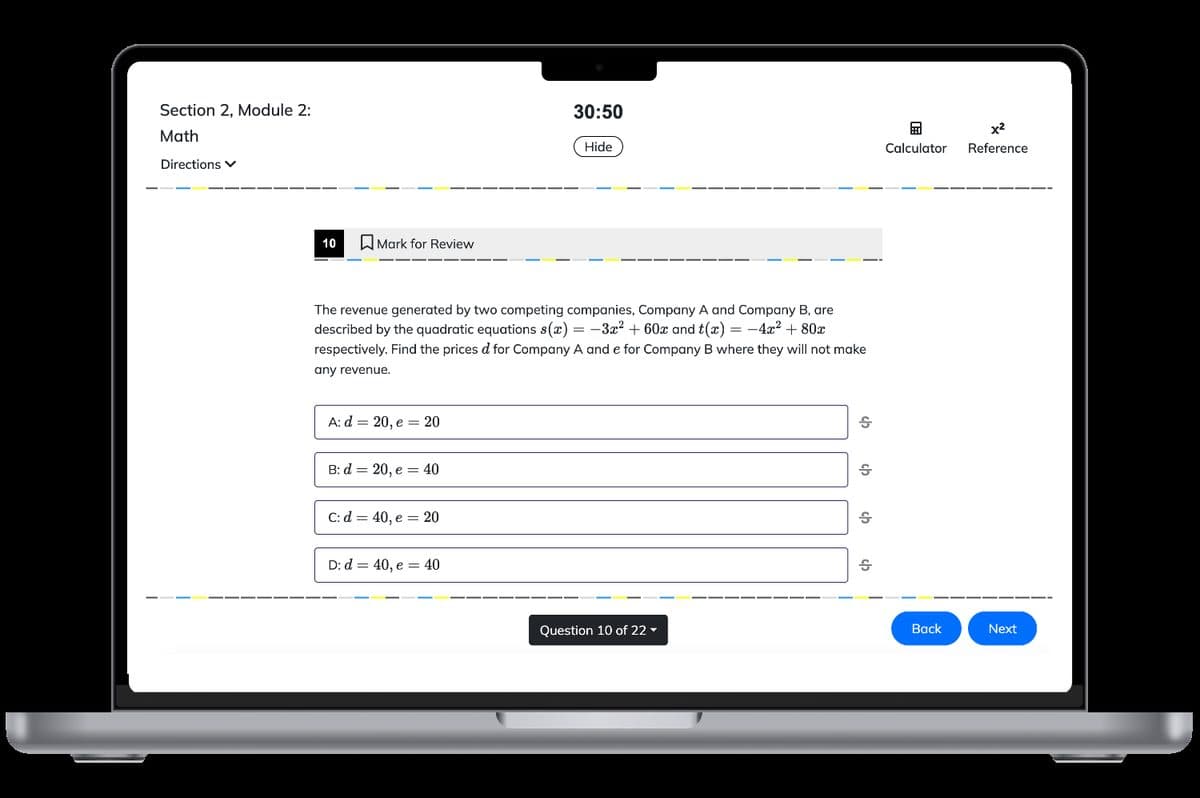
The Reading and Writing section lasts 64 minutes and contains 54 questions. The Math section lasts 70 minutes and contains 44 questions. Each section is divided into two modules, with a ten-minute break between Reading and Writing and Math. The student's performance in the first module influences the difficulty level of the second module.
This matters.
The digital SAT is not merely a paper examination placed on a computer.
Students must become comfortable reading on a screen, using the testing tools, managing the timer, navigating between questions within a module, entering certain math answers, and working with the built-in calculator.
A student can understand algebra.
A student can understand grammar.
A student can possess a strong vocabulary.
But if that student has never completed a full examination through Bluebook under realistic conditions, the test-day experience may still feel unfamiliar.
Preparation should therefore develop two abilities at the same time.
Academic ability.
Testing ability.
Academic ability helps the student solve the problem.
Testing ability helps the student solve it accurately, efficiently, and calmly under a time limit.
Both matter.
In order to book your Digital SAT test date, go to the official site here.
The Problem With Last-Minute SAT Preparation
Last-minute preparation often produces activity without producing understanding.
The student completes hundreds of questions.
The family purchases additional books.
The student watches strategy videos at double speed.
A new study schedule appears every few days.
But no one stops to ask the most important question:
Why is the student losing points?
A student scoring below the target may have gaps in algebra.
Others may understand the math but work too slowly.
Another may miss Reading and Writing questions because they rely on what sounds correct instead of identifying evidence in the text.
Another may perform well during untimed practice but become anxious during a full-length test.
Another may know the material but repeatedly make small errors while rushing.
These students should not follow identical preparation plans.
One needs content instruction.
One needs pacing practice.
One needs a stronger question-solving process.
One needs test-day conditioning.
One needs greater attention to detail.
A practice test can reveal the score.
Only careful evaluation can reveal the reason.
That is why preparation should begin with diagnosis rather than judgment.
A low starting score is not a final conclusion.
It is information.
Another may miss Reading and Writing questions because they rely on what sounds correct instead of identifying evidence in the text.
Another may perform well during untimed practice but become anxious during a full-length test.
Another may know the material but repeatedly makes small errors while rushing.
These students should not follow identical preparation plans.
One student may need content instruction.
Another may require pacing practice.
Others might need specific training for test day
Some could use more emphasis on attention to detail
Taking a practice test can indicate a student's potential score, but only a thorough evaluation can identify the underlying reasons for their performance. This is why preparation should begin with a diagnosis rather than a judgment. A low starting score is not a final verdict; it is simply information that can guide improvement.

General Test-Taking Strategies
Before following a monthly schedule, students should establish several habits that apply throughout the entire SAT journey.
Accuracy Comes Before Speed
Students frequently attempt to become faster before they have become accurate.
They rush through questions.
They guess what a passage means.
They skip algebra steps.
They rely on mental calculations when writing one additional line could prevent an error.
This creates the illusion of speed.
It does not create control.
During the early stages of preparation, the student should first learn how to solve each question type correctly.
Once the method becomes reliable, the student can begin reducing the amount of time required.
Speed built without accuracy creates repeated mistakes.
Speed built upon accuracy creates efficiency.
Protect the First Module
Because the digital SAT uses a multistage adaptive structure, performance in the first module helps determine the difficulty of the second module.
This does not mean students should become frightened by every first-module question.
It means they should approach the module with discipline.
Read carefully.
Do not assume an easy-looking question requires no work.
Do not spend several minutes fighting one problem while leaving easier questions unfinished.
Flag difficult questions.
Complete the questions you can solve.
Return with the remaining time.
The strongest students are not always the students who never encounter difficulty.
They are often the students who manage difficulty without losing control of the rest of the module.

Use Evidence, Not Instinct
On Reading and Writing questions, students frequently choose an answer because it sounds sophisticated, familiar, or generally true.
But the SAT is not asking which answer sounds impressive.
It is asking which answer is supported by the text and fulfills the exact task in the question.
Students should learn to ask:
What is the question requesting?
Which words in the passage support the answer?
What makes each incorrect option wrong?
Can I defend my answer using evidence rather than intuition?
This process may feel slower at first.
Over time, it becomes faster because the student stops debating between attractive but unsupported choices.
Learn the Calculator Before Test Day
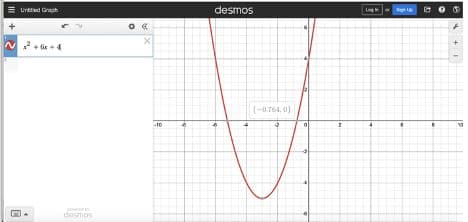
Bluebook includes an embedded calculator for the Math section, and students may also bring an acceptable personal calculator. The College Board advises students who bring their own calculator to practice with the same one they plan to use on test day.
The calculator should not become a substitute for mathematical understanding.
But it can become a powerful tool for graphing equations, checking intersections, evaluating expressions, testing answer choices, and confirming solutions.
Students should practice deciding when the calculator saves time and when it creates unnecessary work.
The goal is not to use the calculator on every question.
The goal is to use it deliberately.
Maintain an Error Log
Every serious SAT student should maintain an error log.
Not merely a collection of incorrect questions.
A record of why those questions were missed.
For each mistake, the student should document:
The section.
The question type.
The concept was tested.
The answer selected.
The correct answer.
Why was the selected answer incorrect?
Why does the correct answer work?
The type of error.
The action needed to prevent the error from happening again.
Errors can be classified into several categories:
Content error: The student did not know the underlying concept.
Process error: The student knew the concept but used an unreliable method.
Reading error: The student misunderstood the question or overlooked an important word.
Timing error: The student ran out of time or spent too long on one problem.
Careless error: The student made a sign, arithmetic, transcription, or selection mistake.
Endurance error: Performance declined near the end of a module or section.
This distinction matters.
A content error requires learning.
A careless error requires a checking routine.
A timing error requires strategic practice.
An endurance error requires realistic full-length testing.
Students cannot correct every mistake in the same way.
Setting a Numerical SAT Target
Students often begin preparation with a vague goal.
“I want a good score.”
“I want something above average.”
“I want a score that will help me get into a strong college.”
These goals are understandable.
They are not measurable.
The SAT is scored from 400 to 1600, with separate Reading and Writing and Math scores ranging from 200 to 800. What qualifies as a useful score depends on the colleges being considered and the rest of the student’s application.
The student should therefore build a numerical target from the college list.
Step One: Create a Preliminary College List
The list does not need to be final in tenth grade.
It should include a range of possibilities:
Highly selective institutions.
Likely target institutions.
More accessible options.
In-state colleges.
Out-of-state colleges.
Public universities.
Private universities.
Colleges with strong programs in the student’s intended area of interest.
The purpose is not to decide the student’s entire future at fifteen.
The purpose is to understand the general testing expectations connected to the current direction.
Step Two: Review Each College’s Testing Policy
Testing policies vary.
Some institutions require SAT or ACT scores.
Some allow students to decide whether to submit them.
Some do not consider them.
Policies can also change between admission cycles, so students should verify the current information directly on each college’s admissions website.
This distinction is particularly important for California families. The University of California currently states that SAT and ACT scores are not considered in admission decisions or scholarship awards, although submitted scores may have limited uses related to eligibility or course placement.
A student applying only to UC campuses may make a different testing decision from a student applying to private universities, out-of-state public universities, merit-scholarship programs, or institutions requiring scores.
The SAT should serve the college strategy.
The college strategy should not be built around the SAT alone.
Step Three: Record the Reported Score Ranges
For every college that considers scores, record the SAT range for recently enrolled students.
Many college profiles display a middle range rather than one required score. College Board’s BigFuture search tool also allows students to compare their GPA and test scores with information reported for enrolled students.
The lower number should not automatically become the target.
The upper number should not automatically become a requirement.
These ranges provide context.
They do not guarantee admission or rejection.
Step Four: Establish Three Numbers
A useful SAT plan can contain three numerical goals.
The minimum useful score
This is the score at which submitting the SAT may begin to strengthen applications at several colleges on the list.
The primary target score
This is the realistic score the student will actively work toward based on the college list, starting score, available preparation time, and academic background.
The stretch score
This is the higher score the student may pursue if progress is strong and the additional preparation does not damage grades, health, or other important commitments.
For example, imagine that a student’s preliminary college list contains score ranges centered around 1350, 1420, and 1480.
The student might create the following framework:
Minimum useful score: 1400.
Primary target score: 1470.
Stretch score: 1520.
These numbers are not admissions guarantees.
They are planning tools.
They help answer practical questions:
How large is the current score gap?
How many months are available?
Which section needs the greatest improvement?
Is the student ready for an official attempt?
Should another test date be reserved?
Without a number, improvement feels abstract.
With a number, the student can build a plan.

The Week Before the SAT
The week before the SAT is not the time to rebuild the entire preparation process.
It is the time to protect the preparation already completed.
Students often panic during the final week.
They suddenly complete multiple practice tests.
They remain awake reviewing formulas.
They attempt to learn every grammar rule they previously ignored.
They interpret every difficult practice question as evidence that they are unprepared.
This usually creates exhaustion rather than improvement.
Seven Days Before
Complete the final full-length Bluebook practice test approximately one week before the official examination.
Recreate testing conditions.
Start around the same time as the official exam.
Sit at a desk.
Silence the phone.
Use the same calculator and testing device planned for test day.
Take only the allowed break.
The purpose is not to learn dozens of new concepts.
It is to confirm pacing, endurance, equipment familiarity, and strategy.
College Board recommends using official Bluebook practice tests to experiment with pacing and testing strategies while becoming comfortable with the platform’s tools.
Five to Six Days Before
Review the final practice test carefully.
Do not merely look at the score.
Identify the last few high-value corrections.
Perhaps the student is still missing transitions.
Perhaps nonlinear equations remain inconsistent.
Perhaps too much time is being spent on difficult vocabulary-in-context questions.
Select a limited number of priorities.
A student cannot repair everything in five days.
But a student can reduce a few repeated errors.
Three to Four Days Before
Complete short, targeted practice sets.
Avoid another exhausting full-length test.
Review formulas.
Review grammar rules.
Review the error log.
Practice a small number of questions from the most important weak areas.
The objective is confidence and precision.
Not volume.
Two Days Before
Confirm the logistics.
Check the test-center location.
Confirm transportation.
Review the arrival instructions.
Charge the testing device.
Complete the required Bluebook exam setup.
Locate the physical photo identification.
Print or save the admission ticket appropriately.
Confirm that the calculator is permitted and functioning.
Prepare a charging cable, snack, drink, pencils or pens, and any approved materials.
College Board instructs students to bring a fully charged device with Bluebook installed, an up-to-date admission ticket, acceptable physical photo identification, writing tools for scratch work, their College Board login information, and an acceptable calculator if they plan to use one instead of or in addition to the embedded calculator.
The Day Before
Complete only light review.
Do not take another full-length examination.
Do not compare scores with friends.
Do not begin a new preparation book.
Eat familiar food.
Prepare clothing.
Set multiple alarms.
Go to sleep at a reasonable time.
The day before the SAT should feel almost boring.
That is a good sign.
Preparation has already occurred.
Now the student is protecting it.

Creating an Effective SAT Exam Day
Test day should not require improvisation.
The student should know what to bring.
The student should know how to reach the testing center.
The student should know how the Bluebook tools work.
The student should know the pacing plan.
The student should know what to do when a difficult question appears.
Arrive With Time to Spare
Rushing into the testing center increases unnecessary stress.
Arrive early enough to handle parking, room assignments, identification checks, device issues, and unfamiliar surroundings.
Do Not Let One Question Control the Module
Some SAT questions will feel unusually difficult.
That does not mean the entire test is going badly.
It does not mean the student has entered the wrong module.
It does not mean the target score is disappearing.
It means one question is difficult.
Make the best strategic decision.
Solve it.
Flag it.
Estimate it.
Return to it.
But do not allow it to consume the time needed for several manageable questions.
Use the Break
Stand up if permitted.
Drink water.
Eat a small, familiar snack.
Avoid discussing questions with other students.
The first half is over.
The second half has not yet begun.
The break should reset attention rather than extend anxiety.
Do Not Score the Examination While Taking It
Students sometimes attempt to calculate how many questions they may have missed.
They replay earlier answers during the Math section.
They interpret a hard second module as success.
They interpret an easier-looking question as disaster.
None of this helps with the question currently on the screen.
The student’s responsibility is not to predict the score.
It is to complete the next problem.
The Month-by-Month SAT Roadmap
A strong SAT timeline should develop gradually from tenth grade through twelfth grade.
The exact schedule may vary depending on the student’s starting score, coursework, college list, activities, and school calendar.
But the progression should remain consistent:
Foundation.
Diagnosis.
Targeted preparation.
Official testing.
Evaluation.
Recovery when necessary.
Completion.
Tenth Grade: Foundation and Familiarity
Tenth grade should not become a year-long SAT boot camp.
It should become the year in which the examination stops being mysterious.
August: Understand the Journey
Begin by learning what the digital SAT contains.
Review the Reading and Writing and Math sections.
Explore the Bluebook test preview.
Learn how the timer, highlighting tool, answer eliminator, flagging feature, and embedded calculator work.
Do not begin by purchasing five books.
Begin by understanding the examination.
The student should also create a College Board account and make sure the name, email address, and school information are correct.
September: Take a Baseline Practice Test
Complete one official full-length Bluebook practice test.
Do not study intensively beforehand.
The purpose is to establish a true starting point.
Record:
The total score.
The Reading and Writing score.
The Math score.
The strongest content areas.
The weakest content areas.
The questions left unfinished.
The careless mistakes.
The sections in which concentration declined.
This score is not a prediction of the student’s final result.
It is the first measurement.
October: Use the PSAT as Information
When available through the student’s school, take the appropriate PSAT assessment seriously but calmly.
The PSAT can provide additional information about testing habits and academic strengths.
Do not treat a tenth-grade PSAT score as a permanent label.
A sophomore is still learning major mathematical content and developing reading maturity.
The important question is not:
“Is this score good enough?”
The important questions are:
What did the student understand?
What was unfamiliar?
Where was time lost?
Which academic skills need strengthening during the school year?
November: Build the Error Log
Review the baseline examination and PSAT information.
Create the error-log categories.
Begin identifying patterns.
Perhaps most Reading and Writing mistakes involve punctuation.
Perhaps Math errors center on linear equations and percentages.
Perhaps the student knows the material but rushes through easier questions.
Choose two or three priorities.
Not twelve.
A useful plan is focused enough to follow.
December: Strengthen Reading and Grammar
Use the winter months to build skills that support both the SAT and schoolwork.
Read challenging but appropriate material regularly.
This might include:
Newspaper analysis.
Scientific articles.
Historical writing.
Literary criticism.
Long-form journalism.
Essays discussing social, economic, or technological questions.
The goal is not to memorize unusual vocabulary lists.
It is to become more comfortable identifying arguments, evidence, relationships, tone, and precise word meaning.
Review foundational grammar:
Sentence boundaries.
Punctuation.
Subject-verb agreement.
Pronoun agreement.
Verb tense.
Modifiers.
Transitions.
Logical sentence placement.
These rules are learnable.
January: Reinforce Algebra
Return to the baseline Math results.
Review the algebraic foundations most frequently creating difficulty.
Possible areas include:
Linear equations.
Systems of equations.
Inequalities.
Ratios.
Percentages.
Rates.
Exponents.
Word-problem translation.
Students should solve problems step by step.
Do not rush into advanced shortcuts before the underlying method is reliable.
February: Develop Advanced Math Skills
Move toward quadratics, functions, nonlinear equations, geometry, and data analysis according to the student’s current coursework and readiness.
Connect SAT preparation to school mathematics.
When a concept appears in class, identify how the SAT may test it.
This prevents test preparation from becoming an entirely separate academic world.
Strong classroom learning is SAT preparation.
March: Learn the Digital Math Tools
Practice using the embedded calculator.
Graph equations.
Find intersections.
Check roots.
Evaluate tables.
Compare answer choices.
Explore how changing an equation changes its graph.
The student should also recognize questions that are faster without the calculator.
Technology should reduce unnecessary work.
It should not replace reasoning.
April: Introduce Timed Mini-Modules
Begin short timed practice.
A student might complete ten Reading and Writing questions or eight Math questions under a reasonable time limit.
The purpose is to notice pacing.
Which questions take too long?
When does accuracy begin to decline?
Does the student reread unnecessarily?
Does the student spend several minutes checking an answer that was probably correct?
Timed practice should begin in small amounts before it expands into frequent full-length testing.
May: Take the Second Full-Length Practice Test
Complete another official Bluebook examination.
Compare the result with the September baseline.
Look beyond the total score.
Did Math improve while Reading and Writing remained unchanged?
Did the student finish more questions?
Did careless errors decrease?
Did performance improve in the first module but decline in the second?
Growth should be evaluated by pattern, not only by one number.
June: Create the Summer Plan
At the end of tenth grade, decide how much SAT preparation the summer should contain.
A student far from the target may need structured content instruction.
A student already near the target may need a lighter maintenance plan.
A student overwhelmed by school may benefit from rest before beginning a focused late-summer schedule.
The summer plan should include:
Weekly study hours.
Primary weak areas.
Selected materials.
Practice-test dates.
A tentative junior-year testing window.
July: Build Consistency
Use July to establish a sustainable routine.
For many students, three focused sessions per week are more valuable than one exhausting weekend session.
A weekly pattern might include:
One Reading and Writing skill lesson.
One Math skill lesson.
One mixed-question practice set.
One error-log review.
A full-length examination should be used periodically.
Not constantly.
Practice tests measure improvement.
They do not create improvement by themselves.
Eleventh Grade: Preparation and Performance
Eleventh grade is the central SAT year.
The student now has stronger academic preparation, a developing college list, and enough time to take the examination more than once if necessary.
The College Board recommends that students consider taking the SAT in the spring of junior year and, when helpful, again during the fall of senior year.
August: Set the Working Target
Review the preliminary college list.
Research current testing policies and reported score ranges.
Establish the minimum useful score, primary target score, and stretch score.
Then compare the most recent practice result with the target.
For example:
Current practice score: 1280.
Primary target score: 1450.
Score gap: 170 points.
The student now has a measurable task.
Break the gap into sections.
Reading and Writing may need 70 points.
Math may need 100 points.
The preparation plan should reflect that difference.
September: Begin Targeted Preparation
Move from general skill-building to targeted SAT preparation.
Use the error log and score report to choose specific domains.
The College Board Student Question Bank contains thousands of official questions that can be filtered by section, domain, skill, and difficulty.
This allows a student to practice strategically.
A student struggling with transitions does not need a random collection of Reading and Writing questions.
A student struggling with nonlinear functions does not need twenty additional percentage questions.
Practice should follow the evidence.
October: Practice Under Real Conditions
Take the PSAT/NMSQT when appropriate and available through the school.
Treat it as a serious rehearsal.
Use the normal testing routine.
Sleep properly.
Eat breakfast.
Use the planned pacing strategy.
Apply the flag-and-return method.
Afterward, record what the experience revealed.
The PSAT score matters less than the behavioral information.
Did the student remain calm?
Did timing work?
Did attention decline?
Was the calculator used effectively?
November: Diagnose the Remaining Gap
Review the fall results.
Calculate the distance between the current performance and target.
Then identify whether the gap is caused primarily by:
Missing academic concepts.
Inconsistent accuracy.
Timing.
Testing anxiety.
Weak endurance.
Careless mistakes.
Do not simply increase the number of study hours.
Improve the quality of the plan.
December: Complete a Formal Benchmark
Take a full-length official Bluebook practice test under realistic conditions.
Bluebook practice tests use the adaptive format and provide detailed results that students can review through My Practice. The platform can also generate tailored practice based on performance.
This December score should help determine whether the student is on track for a March, May, or June official examination.
Reserve official practice tests carefully.
Do not complete them casually while watching television, pausing repeatedly, or checking answers between modules.
Official tests are limited and valuable.
Use them as measurements.
January: Begin the Focused Testing Cycle
Choose the first official SAT date.
Weekend SAT administrations are generally offered during March, May, June, August, October, November, and December, although students should confirm the current dates and registration deadlines directly with the College Board.
Work backward from the selected date.
A focused cycle can include:
Two content-focused sessions per week.
One timed module or mixed set.
One error-log review.
One full-length practice test every two or three weeks.
The student should not attempt to complete a full examination every weekend for several months.
Frequent testing without review produces fatigue.
February: Develop Timing and Endurance
By February, the student should know most of the tested concepts.
The emphasis should begin shifting toward execution.
Practice completing modules without interruption.
Develop pacing checkpoints.
Learn when to move forward.
Practice using the break.
Identify whether performance drops during the final questions.
Continue reviewing every error.
The goal is not merely to survive the time limit.
It is to maintain accuracy within it.
March: Complete the First Official SAT Attempt
For many students, March can be an appropriate first official testing window.
The student has completed most of eleventh-grade coursework and still has time for additional attempts.
Approach the examination as an important performance.
Not a final verdict.
Use the week-before plan.
Complete the Bluebook setup.
Prepare the materials.
Follow the pacing strategy.
Then take the test.
Once the examination is over, return attention to school.
Repeatedly guessing the score will not change it.
April: Evaluate the Official Score
When the score arrives, compare it with:
The target score.
The most recent practice-test range.
The section goals.
The college list.
The student’s test-day experience.
Do not react only to the total.
Suppose the target is 1450 and the student earns 1390.
That does not automatically mean the preparation failed.
Perhaps Math reached the target while Reading and Writing remained 60 points below it.
The next plan should focus on that section.
Suppose the student had repeatedly scored between 1430 and 1470 in practice but earned 1350 officially.
That may indicate a test-day problem rather than a large content gap.
Recovery begins with the correct diagnosis.
May: Retest or Rebuild
A May attempt may be appropriate when the March score is close to the target and the student has identified a limited number of corrections.
It may not be appropriate when the student needs substantial content rebuilding or is overwhelmed by AP examinations.
Taking another SAT without changing the preparation rarely produces the desired transformation.
Before retesting, the student should be able to answer:
What went wrong?
What has changed?
What evidence shows improvement?
Why is this testing date appropriate?
A retake should have a reason.
June: Use the Final Junior-Year Opportunity Strategically
June can provide another junior-year testing opportunity.
For some students, this is the final planned attempt.
For others, it establishes the score that will guide a summer recovery plan.
Students should consider academic workload, final examinations, extracurricular commitments, and readiness.
The earliest available test is not always the best test.
The best test is the one for which the student can prepare responsibly while protecting the rest of the academic record.
July: Decide Whether Senior-Year Testing Is Necessary
Review all official results.
Update the college list.
Check current testing policies.
Ask:
Is the score within or above the useful range for the colleges where it will be submitted?
Is one section holding back a possible superscore?
Is there enough time and energy for meaningful improvement?
Would additional SAT preparation interfere with essays, applications, leadership responsibilities, or senior-year coursework?
If a retake is needed, choose the likely August or October testing window and register before seats become limited.
Twelfth Grade: Recovery and Completion
Twelfth grade should not become an endless testing cycle.
The purpose is to complete the SAT process early enough to protect the college-application process.
August: Complete the Strongest Prepared Retake
For students who studied during the summer, August can be an effective retesting opportunity.
The preparation should focus on the specific weaknesses identified from junior-year results.
Do not restart the entire curriculum unless the evidence supports doing so.
If Math is already strong, maintain it while directing more time toward Reading and Writing.
If grammar accuracy is high but reading pace is weak, practice comprehension and timing.
If the student is close to the target, improvement may depend on reducing five or six repeated mistakes.
Senior-year preparation should be precise.
September: Compare the Score With the Final College List
By September, the college list should be more stable.
Create a score-policy chart containing:
College name.
Testing requirement.
Reported SAT range.
Current score.
Whether the score will be submitted.
Whether the institution superscores.
Relevant score-submission deadline.
This turns an emotional decision into an organized one.
A score does not need to be submitted everywhere simply because it exists.
It should be used where it supports the application and where institutional policy permits the student to make that choice.
October: Use the Final Major Retake Window
For many seniors, October becomes the final practical attempt connected to early application plans.
Students must confirm each college’s application and score-receipt policies before assuming an October result will be considered.
The student should enter this examination with a clear improvement plan.
Not with the hope that the score will somehow rise because this attempt feels more important.
Pressure is not preparation.
Preparation is preparation.
November: Test Only With a Clear Purpose
Some students may consider a November SAT.
This can make sense when regular-decision deadlines permit it and the student has demonstrated stronger practice results.
It makes less sense when college applications are suffering because the student remains trapped in SAT preparation.
At some point, the student must decide that the testing process is complete.
There will always be another possible point.
Another missed question.
Another imagined score.
College applications require attention to more than testing.
December: Confirm Final Policies and Scores
A December attempt may be usable for certain regular-decision applications, but students must verify institutional deadlines and score-arrival requirements before registering.
Do not assume that every college will accept every late score.
Confirm.
Document.
Plan.
Once testing is complete, review Score Choice and superscoring policies carefully.
College Board’s Score Choice program allows students to choose which complete test-date score reports to send, but some colleges and scholarship programs require all scores. Students cannot independently combine sections before sending them, although colleges that superscore may combine the highest section results from different test dates.
January: Close the SAT Chapter
By January of twelfth grade, the student’s attention should move fully toward completing applications, maintaining grades, preparing for interviews when applicable, pursuing financial aid, and finishing high school strongly.
The SAT has served its purpose.
The score has been earned.
The decisions have been made.
The student should not allow one examination to define the meaning of four years of academic work.
Choosing Practice Books and Resources
Students do not need every SAT book available.
They need a small collection of resources used consistently and intelligently.
The Official SAT Study Guide
The College Board’s Official SAT Study Guide provides an overview of the examination, test-taking guidance, and official practice material. College Board notes that the same official practice tests are available free through Bluebook, while the printed guide can be useful for students who prefer reviewing explanations and concepts on paper.
The official guide should be used to understand the test and review authentic questions.
It should not replace digital practice.
The real SAT is taken through Bluebook.
At least several major practice examinations should therefore be completed digitally.
Bluebook Practice Tests
Official full-length Bluebook tests should form the core of the practice-test plan.
They should be used for:
The initial diagnostic.
The end-of-tenth-grade checkpoint.
The junior-year winter benchmark.
The pre-exam checkpoints.
The final test-day rehearsal.
Students should avoid wasting official tests by completing them in fragments without a clear purpose.
Each official test should produce:
A score.
An error analysis.
A list of weak skills.
A revised preparation plan.
A test without review is an unfinished assignment.

The Student Question Bank
The Student Question Bank is useful for targeted practice after a weakness has been identified.
Students can filter official questions by section, domain, skill, and difficulty.
For example:
A student repeatedly missing transitions can create a transition-focused set.
A student struggling with advanced algebra can isolate those questions.
A student performing well on easy questions but poorly on difficult questions can adjust the difficulty filter.
This is more effective than repeatedly completing random mixed sets.
Khan Academy
Official Digital SAT preparation on Khan Academy provides lessons, videos, hints, strategies, and practice questions for Reading and Writing and Math.
It can be used to rebuild content skills before returning to official timed questions.
The best use of Khan Academy is not endless clicking.
It is targeted learning.
Identify the weakness.
Study the concept.
Complete related questions.
Review the mistakes.
Recheck the skill later.

Specialized Preparation Books
Some students benefit from an additional book focused on one section.
A student struggling with grammar or Reading and Writing strategy might use a current digital-SAT resource from an established test-preparation author, such as the relevant books published by Erica Meltzer. Her materials focus on the reading and grammar concepts tested on standardized examinations.
A student struggling with Math may benefit from a current digital-SAT math workbook organized by concept and difficulty.
The important phrase is:
Current digital SAT.
Older books designed for previous SAT formats may still contain useful algebra or grammar exercises, but their passage structure, timing, question design, and testing strategy may no longer match the current examination.
Before purchasing any book, verify that it was created or updated for the digital SAT.
More books do not automatically create more improvement.
A completed book with careful review is more valuable than four partially completed books.

How to Evaluate a Practice Test
The practice-test score is the beginning of the evaluation.
Not the end.
After every full-length examination, students should complete a structured review.
Record the Score
Write down:
Total score.
Reading and Writing score.
Math score.
Date.
Testing conditions.
Hours of sleep.
Whether the test was completed in one sitting.
Any interruptions or technical issues.
This creates a more reliable score history.
Review Every Incorrect Answer
For each incorrect question, determine:
What skill was tested?
Did the student understand the question?
Was the correct concept known?
Was the chosen method efficient?
Was the mistake caused by time pressure?
Could the student solve the question correctly without a time limit?
The difference between “I did not know” and “I knew but rushed” is important.
Review Correct Answers That Involved Guessing
A correct guess is not yet a mastered skill.
Mark questions that were answered correctly with low confidence.
Review them as seriously as incorrect answers.
Otherwise, the same weakness may appear as a missed question on the next examination.
Calculate Accuracy by Skill
Do not rely only on the section score.
A Reading and Writing score may contain strong grammar performance but weak comprehension performance.
A Math score may contain strong algebra but weak geometry and data analysis.
Identify the internal pattern.
The section score tells the student where points were lost.
The skill analysis explains how to recover them.
Track Timing
Record where time became difficult.
Did the student rush during the final five questions?
Did one advanced Math problem consume four minutes?
Did the student reread every Reading and Writing passage?
Did the student finish early but make avoidable errors?
Timing problems are not always caused by slowness.
Sometimes they are caused by inefficient choices.
Write the Next Action
Every reviewed mistake should lead to a specific action.
Not:
“Study math more.”
Instead:
“Review systems of equations and complete twenty medium-difficulty official questions by Friday.”
Not:
“Improve grammar.”
Instead:
“Review sentence boundaries and punctuation, then complete two targeted question-bank sets.”
Specific actions create measurable preparation.

What to Do When the Score Is Lower Than Expected
A disappointing SAT score can feel personal.
The student may feel embarrassed.
The parent may feel worried.
The family may immediately begin calculating what the score means for every college on the list.
But an unsatisfactory score is not an emergency.
It is a result that requires interpretation.
College Board permits students to take the SAT multiple times and recommends at least two attempts for many students—one in the spring of junior year and another in the fall of senior year. It also reports that many students improve on a later attempt.
Recovery should still be strategic.
First: Wait Before Reacting
Do not redesign the entire college plan within the first hour.
Allow the student to process the result.
Then review the score calmly.
Second: Compare the Score With the Practice Range
If the student consistently earned 1450–1490 in practice and received 1360 officially, investigate test-day factors.
Was the student ill?
Was sleep poor?
Was anxiety unusually high?
Did a device or testing-center problem occur?
Did pacing collapse?
If the student consistently earned 1340–1380 in practice and received 1360 officially, the official result was probably consistent with the current skill level.
The recovery plan must address the actual situation.
Third: Identify the Section Opportunity
Suppose the student earned:
Reading and Writing: 650.
Math: 760.
The most efficient improvement opportunity may be Reading and Writing.
Suppose the scores were:
Reading and Writing: 740.
Math: 670.
The opposite may be true.
Do not divide preparation time equally merely because the SAT has two sections.
Allocate time according to the score gap and the student’s ability to improve.
Fourth: Build a Recovery Cycle
A recovery cycle might last four to eight weeks depending on the size of the gap and the student’s schedule.
It should include:
A detailed score review.
Two or three priority skills.
Targeted lessons.
Official question-bank practice.
Timed modules.
One or two full-length checkpoints.
A revised test-day routine.
The next official examination should come after evidence of improvement.
Not merely after another registration fee.
Fifth: Use Superscoring Strategically
Many colleges superscore, meaning they combine the student’s highest Math score and highest Reading and Writing score from different test dates. However, each institution controls its own policy.
This may change the preparation strategy.
A student with a strong Math score may focus more heavily on Reading and Writing for the next attempt.
But students should still confirm the policies of every college on the final list.
Never assume.
Sixth: Know When to Stop
A student should not continue retesting indefinitely simply because a perfect score remains theoretically possible.
Consider:
Is the score already competitive for the college list?
Is improvement occurring in practice?
Will another attempt interfere with grades or applications?
Is the emotional cost becoming too high?
Would the student’s time be more valuable elsewhere?
An SAT score is one part of the application.
It should not consume the entire application.

What Makes an SAT Plan Strong?
The strongest SAT plans usually contain five elements.
A Numerical Goal
The student knows the score being pursued and why that score connects to the college list.
A Realistic Timeline
The plan begins early enough to build skills and permits another attempt if the first result is disappointing.
Official Practice
The student regularly uses Bluebook, the Student Question Bank, and other current resources aligned with the digital SAT.
Careful Evaluation
Every practice examination produces an error analysis and a revised action plan.
Recovery Options
The student knows what will happen if the first official score does not meet the goal.
A strong plan does not assume perfection.
It prepares for adjustment.
The SAT Should Support the Student
Parents can help create the schedule.
Tutors can explain difficult concepts.
Counselors can help connect the score target to the college list.
Teachers can strengthen the academic foundations.
But the student must understand the plan.
The student should know the target.
The student should maintain the error log.
The student should evaluate practice results.
The student should understand why another test is—or is not—necessary.
The SAT should not become something adults perform around the student.
It should become a process the student learns to manage.
That management is part of college readiness.

The New Definition of SAT Preparation
SAT preparation is not a single course.
It is not a stack of books.
It is not a summer filled with practice tests.
It is not a parent repeatedly asking:
“Did you study today?”
It is a progression.
In tenth grade, the student builds familiarity.
In eleventh grade, the student develops precision and completes the first official attempts.
In twelfth grade, the student makes strategic decisions, recovers where necessary, and completes the process.
The score matters.
But the process teaches something beyond the score.
It teaches the student to set a measurable goal.
To evaluate performance honestly.
To separate mistakes from identity.
To adjust when the first result is disappointing.
To prepare for an important day without allowing that day to define everything.
A student may begin tenth grade without knowing what score is possible.
That is acceptable.
The student only needs a responsible place to begin.
Take the baseline.
Build the foundation.
Set the target.
Practice deliberately.
Evaluate every result.
Retake when there is a clear reason.
Stop when the score has served its purpose.
Because the goal was never simply to sit for the SAT.
The goal was to approach the examination with enough time, knowledge, and self-awareness that one score—whether satisfying or disappointing—never becomes the end of the story.